Sunday, 27 August 2017

21st Sunday of the Year

'You are Peter and on this rock I will build my church' - Matthew 16:18

Sistine chapel Fresco, Pietro Perugino

The ‘power of the Church derives from this moment in the Gospels where Jesus gives the authority and power to Peter and the disciples. Today we celebrate the gift of the church and especially the Sacraments which Christ gave to the Church so that people like us could be first accepted and then retained within the Church despite our unworthiness.

Items in this week's newsletter:

CONSIDERING YOUR VOCATION AS A DEACON? :Oscott Seminary have introduced a preparatory year for men discerning a call to the Permanent Diaconate. This Propaedeutic year consists of three sessions (Friday-Saturday) and commences on 10th/11th November. The other dates for this academic year are 26th/27th January and 16/17th March.  Its aim is to help candidates better understand the reality of a vocation to Holy Orders and to discern whether this is what God is calling them to. There will be Parish based pastoral elements, spiritual formation and intellectual input given through teaching, seminars and discussions.   Wives of prospective candidates will also be supported during these days and are encouraged to attend. Attendance at these days does not commit an individual to beginning the formation program, but is part of the overall selection process.For further information, please e-mail Fr Peter Hart as soon as possible, or complete the Preliminary enquiry form. Application deadline is 1st November.


ORDINATIONS TO THE PRIESTHOOD. Deacon Ian Westby will be raised to the Sacred Priesthood on Tuesday 24th October in Stockton-on-Tees. Please keep him in your prayers. The Ordination of Deacons at Spanish Place in June was a great occasion and plans are already being made regarding priestly Ordinations next year. It is likely that our two Scottish deacons will be ordained in Scotland and I hope that we will have one Ordination Mass for the other candidates at a central location.

ORDINARIATE LAY CONFERENCE 2018. The Pastoral Council of the Ordinariate is arranging a Lay Conference to be held at Worth Abbey form 7th-9th August 2018. The theme of the conference is Being Ordinariate and it is envisaged that each Group will send 2 to 5 delegates who will return to their groups feeling ‘enthused, motivated, informed, and empowered’. Full board accommodation at Worth Abbey will cost £60 per person per night and for any wishing to go this will be covered by the Reading Mission. Full details will follow, but please let Fr Elliott know if you would like to be one of the delegates.

Kevin McNamara RIP. Jesu mercy, Mary pray.

Saturday, 7 January 2017

Feast of the Epiphany


The Epiphany is always very heavily loaded with imagery and this is for two principal reasons. Firstly there are many traditions and these additional traditions means that Mass on the day of the Epiphany itself always becomes very crowded with the rich variety – with Magi water, the blessing of chalk, the presentation of incense, procession to the crib, and the proclamation of the date of Easter. For this reason we will use the shorter Eucharistic prayer today and also move from the creed straight to the offertory. Please as you offer your incense to the priest offer it for some cause or person by way of an intercession.


The second reason Epiphany can be crowded is that we mark not one but three events: the coming of the Magi, the Baptism of Christ, and the first miracle at the Wedding at Cana in Galilee. Some years each of these gets a dedicated Sunday (in year C – such as last year). Other years we only get two and occasionally only one Sunday. This is one such year where we get one Sunday, with the Baptism falling in the week. So there is far too much for us to celebrate in one Mass. I encourage you all to ponder on the mysteries of the Epiphany over the next few days so that the great richness that is offered does not go unheeded.


Monday, 2 January 2017

Reading Ordinariate group calendar


Our calendar for the year's events can now be found online by clicking here. This calendar will be updated throughout the year, a link to the most up-to-date calendar will appear in the sidebar (non-mobile version only).

Happy New Year ... again


Although Mary is the Mother of God, she is not his mother in the sense that she is older than God or the source of her Son's divinity, for she is neither. Rather, we say that she is the Mother of God in the sense that she carried in her womb a divine person - Jesus Christ, God 'In the flesh' (2 John 7, c.f. John 1:14) - and in the sense that she contributed the genetic matter to the human form God took in Jesus Christ.

To avoid this conclusion, Fundamentalists often assert that Mary did not carry God in her womb but only carried Christ's human nature. This assertion reinvents a heresy from the fifth century known as Nestorianism, which runs aground on the fact that a mother does not merely carry the nature of her child in her womb. Rather, she carries the person of her child. Women do not give birth to human natures; they give birth to persons. Mary thus carried and gave birth to the person of Jesus Christ, and the person she gave birth to was God.


The Nestorian claim that Mary did not give birth to the unified person of Jesus Christ attempts to separate Christ's human nature from his divine nature, creating two separate and distinct persons - one divine and one human - united in a loose affiliation. It is therefore a Christological heresy, which even the Protestant Reformers recognized. Both Martin Luther and John Calvin insisted on Mary's divine maternity. In fact, it even appears that Nestorius himself may not have believed the heresy named after him. Futher, the 'Nestorian' church has now signed a joint declaration on Christology with the Catholic Church and recognizes Mary's divine maternity, just as other Christians do.

Friday, 23 December 2016

Advent Meditation III

Today is the final day of the O Antiphons about which we sang on Sunday in the hymn O come, O come Emmanuel.


Emmanuel- God with us- this was a radical fulfillment of the Messianic prophecies which the Jews had never dreamed would happen: a divine Messiah. Though the promises all refer to and fit Jesus, the Messiah expected by the Israelites was not divine. To their reasoning, none could be literally divine, really the Son of God. Their expectation of a saving ruler did not assume that God would share His very nature and essence with the Anointed One.

Emmanuel reflects an entirely Christian and entirely new theology, one of Incarnation and an immanence hitherto unknown. God with us, sharing every hardship of humanity in His own flesh, dwelling not in a Temple spiritually, but as flesh and blood among humanity, wishing to remain with us until the end of time. This is a dramatic contrast to the affection, yet distance with which the Lord was regarded in the Old Testament.


Emmanuel- God with us- it finally springs the liturgical construct of “waiting” all through and admits that we knew He was there all along. Advent has that flavour, of a pretended waiting for Him Whom we know to have already arrived. We place ourselves in the shoes of those who had Him not in order to better appreciate Him Whom we have had all along.

We hail Christ as King and Lawgiver (Isaiah 32:22,) and echo the dying words of Jacob in Genesis 49:10, ” The sceptre will not pass from Judah, nor a ruler form his thigh, till He comes that is to be sent. He is the expectation of the nations.” We ask Him to save us. The Latin “Salva” , the imperative form of “to save,” is related to “salus”, health, wholeness. We are asking for a holistic well- being of mind, soul and body when we thus ask to be saved. We are, in fact, asking finally to be made perfect, fully whole and sound, something only God can do!

Lastly, we no longer beat around the bush, (burning or otherwise!) We come right out and directly call Jesus “our Lord and our God.” It is the crowning acclamation of faith to a long season of expectation.

A blessed late Advent and Christmas to you all.


Tuesday, 13 December 2016

Advent Mediation II

'I will take my stand to watch
And station myself on the tower'. Habakkuk 2:1


Advent is a time for looking back as well as forward. One of the areas we are especially drawn towards is the era of the prophets in the Old Testament. The second and third Sundays of Advent feature John the Baptist especially strongly. He is the linchpin between the Old and New Testaments. He is the last of the prophets: after him there is no need of prophecy in the same way - after Christ's first coming it is the time of mission and the Church. However there is still that same sense of expectation we find in many of the prophets.


Habakkuk who gives us the image of the watchtower lived at the time of the fall of Judah. The book of Habakkuk is a dialogue between himself and God. Habakkuk expresses the fact that Judah fell away from God, and because of this Judah cannot now complain that they are being invaded by a foreign power. Judah has, in effect, forfeited its right to God's care.

Habakkuk however comes to a startling conclusion: one which may be lost on many today. Until this time the Jews always thought of salvation as something which happens to the whole nation and here on the Earth. In other words if the Israelites obeyed God they would all be saved, and their salvation would be in this life rather than in any future life. In chapter two of Habakkuk however the distinction is not so much between Jew and non Jew but between those who are righteous and those who are not righteous. God recognises the injustice in punishing all people for the sins of the few, and therefore Habakkuk emphasises the idea of personal salvation. This is important for us Christians because we believe that our God is a personal God and he teaches and guides us all individually while having the ability to have in perspective the needs of the whole universe. St Paul is much influenced by this idea of salvation for he says, 'He who through faith is righteous shall live'.

Each of us must also set up a watchtower that we might watch for what the Lord has to say to us. Sometimes that might mean putting his wishes before our own selfish pride. Only when pride, that most deceptive of deadly sins, is overcome, can we make room for God in our lives.

Saturday, 3 December 2016

Advent Meditation I

The Book of Baruch in the Old Testament has this to say:

People, look east.
The time is near
Of the crowning of the year.
Make your house fair as you are able,
Trim the hearth and set the table.
People, look east, and sing today:
Love the Guest is on the way.

As you know in the past few months at Mass we have begun to face East again. This was suggested recently as preferred practice by Cardinal Sarah and rather divides opinion in some areas of the Church. There would be good reason for suggesting that when we worship in Advent we should all face east.  This is not because of some nostalgia for the good old days before liturgical renewal when priest and people all faced the east. But rather because of that cry, People, look east, which encapsulates so much of the spirituality of Advent.


Why this emphasis on the east?  Well, its origins are in the way certain Old Testament texts were applied to Christ by the early Christians. The sun is the dominant light in our human experience. But Christ is seen as a greater Sun. So, in the Book of Malachi, Christ is the fulfillment of the prophecy of the ‘Sun of Righteousness, who will rise with healing in his wings’.  In Psalm 19, Christ is the Sun, ‘who comes forth as a bridegroom out of his chamber and rejoices as a giant to run his course, who goes forth from the uttermost part of the heaven and runs to the very end again’. And because he is the true Sun, he is also the true dawn. So in the Benedictus, Christ is the promised ‘dayspring from on high’, who gives light ‘to them that sit in darkness and in the shadow of death’. In beholding the rising sun, the cosmos itself witnesses to Christ, the ‘true and only Light’.


O oriens, we cry in this season as one of the great Advent antiphons. O Dayspring, Brightness of Light everlasting, and Sun of righteousness. Come and enlighten those who sit in darkness and in the shadow of death.

So Advent orients us, or re-orients us towards the east. Advent brings together the Christ who came in the great humility of his first coming; who comes to us daily through his words and his sacraments, who will come, as surly as the sun will rise, as the dawn will break.  People, look east. In Advent, the nights are long; we yearn for the coming of the day, the coming of the light.  In December, on certain days, the dawns are magnificent - in the past few days few of us can have missed the beautiful clear, sunny daybreaks. A beautiful dawn becomes its own sermon. People, look east – and see the promise of God’s glory; a glory we now glimpse in the shining splendour of light.

But as the evenings continue to draw in the sun sets all too early. The growing darkness of this season encourages us to look east: not in wonder and amazement but in expectation. We wait, however long, for the next daybreak. The Church too in this season remains undaunted by the wait for Christ's return in glory, for we know that when it comes it will be worth the wait. Stay awake! Watch! Pray!  Advent is a season to grasp again the reality of salvation to enable us to live by faith and not by sight, to ‘see the invisible’. Wordsworth’s Ode speaks of the youth ‘who daily further from the east must travel’, and yet in Christ we turn, a good Advent word, back to the east, we are re-oriented to where through the saints we have our intimations of immortality. People, look east.


By facing east in Church we are all drawn to the image of the Cross on the altar and to the tabernacle. Cross and altar are many faceted symbol of Christ’s sacrifice, Christ’s presence, of Christ as the source of all nourishment, Christ who feeds us and the world with the gift of himself. Like all who read the Scriptures with care, we agree with the Epistle to the Hebrews that Christ’s sacrifice was offered once when he bore the sins of the world on the cross. And yet, in a real sense, his sacrifice is eternal, for he pleads that sacrifice eternally before the Father. People, look east, for what happened 2,000 years ago in the orient was an eternal moment, drawing us back to that place where heaven and earth were reconciled. And we will only know the full and wondrous length and breadth and height and depth of that sacrifice when we see its fruit, when at last heaven and earth are made one, and a new humanity is revealed, and Christ is owned by all as Lord and King. The subdued purple hangings remind that God’s ultimate purposes in Christ are yet to be fulfilled, which makes our prayer, Marana tha, ‘Our Lord, come’, ‘thy kingdom come’ all the more urgent.

Advent is a time to be re-oriented because Advent is the great season of hope. ‘The people who walked in darkness have seen a great light’.  People, Look east!

Wednesday, 30 November 2016

Happy New Year


Despite the sketchy history behind Advent, the importance of this season remains to focus on the coming of our Lord. (Advent comes from the Latin adventus, meaning 'coming'.) The Catechism stresses the two-fold meaning of this coming: When the Church celebrates the liturgy of Advent each year, she makes present this ancient expectancy of the Messiah, for by sharing in the long preparation for the Saviour's first coming, the faithful renew their ardent desire for His second coming.


Therefore, on the one hand, the faithful reflect back and are encouraged to celebrate the anniversary of the Lord's first coming into this world. We ponder again the great mystery of the incarnation when our Lord humbled Himself, taking on our humanity, and entered our time and space to free us from sin. On the other hand, we recall in the Creed that our Lord will come again to judge the living and the dead and that we must be ready to meet Him.

Sunday, 20 November 2016

Ordinariate Lay Retreat


The Ordinariate Lay retreat will be held at the newly refurbished Dowry Retreat House on High Street, Walsingham (formerly the Sue Ryder Building) from 4pm on Friday 10th March finishing with lunch on Sunday 12th March. The retreat will be led by the Rev'd Dr Stephen Morgan and all are welcome. The cost of the retreat is £150 per person - full board. To reserve your place please send a non-refundable deposit of £20 (cheques payable to Ordinariate OLW) along with your name and address to:

Ordinariate Lay Retreat,
56 Woodlands Farm Road,
Birmingham B24 0PG.

The balance will be due by March 1st 2017.

Christ the King


Today is the feast of Christ the King. Before we begin Advent next week when Christ, the second person of the Trinity, prepares for the first coming, we firstly remember the result of the Incarnation cycle we have marked over the past year: man reigns in heaven with God. Christ is our King in fullness of man and God still bearing the wounds of his passion. At the end of today's Mass we will expose the Blessed Sacrament and rededicate the Human race to the Sacred Heart of Jesus.


A unique King with a unique Kingdom: Jesus Christ still lives as King in thousands of human hearts all over the world. The cross is his throne and the Sermon on the Mount is his rule of law. His citizens need obey only one major law: "Love one another as I have loved you". His love is selfless, sacrificial, kind, compassionate, forgiving and unconditional. That is why the preface in today's Mass describes Jesus' Kingdom and a "a Kingdom of truth and life, a Kingdom of holiness and grace, a Kingdom of justice, love and peace." He is a King with a saving and liberating mission: to free mankind from all types of bondage, and to enable us to live peacefully and happily on earth and to inherit eternal life in heaven.

Sunday, 4 September 2016

23rd Sunday of the Year


“By blood, I am Albanian. By citizenship, an Indian. By faith, I am a Catholic nun. As to my calling, I belong to the world. As to my heart, I belong entirely to the Heart of Jesus. ”Small of stature, rocklike in faith, Mother Teresa of Calcutta was entrusted with the mission of proclaiming God’s thirsting love for humanity, especially for the poorest of the poor. “God still loves the world and He sends you and me to be His love and His compassion to the poor.” She was a soul filled with the light of Christ, on fire with love for Him and burning with one desire: “to quench His thirst for love and for souls.”


The whole of Mother Teresa’s life and labour bore witness to the joy of loving, the greatness and dignity of every human person, the value of little things done faithfully and with love, and the surpassing worth of friendship with God. But there was another heroic side of this great woman that was revealed only after her death. Hidden from all eyes, hidden even from those closest to her, was her interior life marked by an experience of a deep, painful and abiding feeling of being separated from God, even rejected by Him, along with an ever-increasing longing for His love. She called her inner experience, “the darkness.” The “painful night” of her soul, which began around the time she started her work for the poor and continued to the end of her life, led Mother Teresa to an ever more profound union with God. Through the darkness she mystically participated in the thirst of Jesus, in His painful and burning longing for love, and she shared in the interior desolation of the poor.


22nd Sunday of the Year


Confidence is something that Jesus never lacked; in this Sunday's gospel, we see him cheerfully going for one of the "disastrous dinner-parties" with which Luke adorns his gospel. The host this time is "one of the rulers of the Pharisees — and they were watching him". So we know that there is going to be trouble. As indeed there is, for Jesus heals a man with dropsy, but for some reason the compilers of our lectionary have omitted that bit. Instead (and would you invite Jesus to one of your dinner-parties?) the first thing we encounter is Jesus criticising his fellow-guests for wanting the best seats at the party, and encouraging them instead to go straight to the worst seats, on the perhaps slightly cynical grounds that it is better to find yourself summoned upwards from there. Then, in case things had not got quite uncomfortable enough, he turns on his host, and attacks him for inviting his friends. "Don't", he says, as we groan with embarrassment, "invite your friends or brothers and sisters or your cousins or your wealthy neighbours — otherwise they'll invite you back". Instead, it seems, the people we are supposed to invite to our parties are all the wrong people (those with whom Jesus was nearly always to be found): "the destitute, the crippled, the lame, the blind and then you'll be happy, [precisely] because they have no way of repaying you: for you'll get your reward at the resurrection of the just".

We feebly try to imagine what the mood was like around the dinner-table after this speech; but if you are making a mental resolution not to put Jesus on your guest-list, then just ask yourself: suppose it is really true that we are happiest if we make a priority of those whom society ignores? Suppose that we are dealing with a God who prefers those on the margins? Can we cope with this unexpected God of ours?


Sunday, 14 August 2016

The Assumption of our Lady


Today we celebrate the Feast of Our Lady's Assumption. Privately we scratch our heads about this feast, and wonder whether it is really "in the Bible", but it may be I, helpful to remember two things. First, all feasts of Our Lady are always celebrations of her Son; and secondly, no city, anywhere, has ever claimed to have her bones. So the celebration is an ancient one, and no matter how difficult we may find it it is all about Jesus, whose mother had to be different, not because of what she had done, but because God had prepared her for the unique task that she had to fulfil, as Mother of God. In addition to that, the fact that she is, in our belief, now utterly present to God, is a sign for us of where we shall be when our story is finished.


It is not an easy business, being the Mother of God; and nor is it easy being a ;disciple of Jesus, as the first reading for next Sunday reminds us. We are halfway through the Book of Revelation, with its account of what is going on in God's world, with a vision of the Ark of the Covenant, which often stands for Mary in Scripture, and then "a great sign". This "sign" is "a woman clothed in the sun, and the moon under her feet, and on her head a crown of twelve stars". This sounds very grand, but we then learn that this woman is not only in her labour-pains, which is bad enough, but menaced with a thoroughly unpleasant-sounding dragon, which stands before the woman who is about to give birth, "in order to gobble up her child when she gives birth". The child is, quite clearly, Jesus, "who is going to shepherd all the Gentiles with an iron staff', and (to our relief) is snatched up to God's safety. Nothing so congenial for his mother, however, who has to "run away nto the desert, where she has a place prepared from God".

Birmingham Pilgrimage


The final national event of the Ordinariate year is a national pilgrimage to the Shrine of Blessed John Newman in Birmingham. We have been offered use of the Birmingham Oratory on the day nearest to Cardinal Newman's feast day. The pilgrimage begins at St Chad's Cathedral on Friday 7th October, with Sung Evensong and Benediction at 6:30 pm —the Cathedral Choir providing the music. This will be followed by a reception and a talk on Blessed John Henry Newman by Father Ian Ker, who has written several books on Blessed John Henry Newman.

On the Saturday we meet at the Birmingham Oratory. Coffee will be available in the Cloister Hall from 9:45. Confessions from 10:15 in preparation for Mass at 11am followed by veneration of the relics. Packed lunches may be eaten in the Upper Cloister Hall where at 2:30 there will be an address by the Rev'd Dr. Stephen Morgan and a talk on Newman and the Oratory by the Provost.

Friday, 5 August 2016

18th Sunday of the year


The parable of the rich fool, Rembrandt

What are the things that really matter in life? That is the uncomfortable question that the readings for this Sunday pose to us. The first reading comes to us from Qoheleth, or Ecclesiastes (“the Preacher”) as his Greek nickname goes, with the well-known refrain that goes “Vanity of vanities, all is vanity”. Then (leaping into his second chapter, for some reason), this deep and radical thinker offers an example of this “vanity”: “a person who has expended effort and wisdom and expertise and skill – and he leaves his portion to someone who has not put in the effort. This is also vanity and great wickedness”. Some scholars point out that Qoheleth hardly ever mentions God; but you can do God’s work without speaking of the Almighty, and the task of the Preacher is to expose the foolishness of the pursuits to which we normally give our energies, in order that we may find our way to God.

That is a point made more explicitly in the Psalm for this Sunday, setting the folly of human pursuits against God’s greater purposes (“You turn human beings back into dust, and say, ‘Go back, sons of men’.”) and different perspective (“In your eyes a thousand years are like a single day, yesterday...a dream in the night”). So for God, all our passionate human endeavours are “like grass that flourishes in the morning – in the evening it withers and fades”. So we need God’s perspective, to find out what really matters: “Teach us to number our days that we may gain a wise heart”, and then, in a prayer that comes from the heart, “fill us in the morning with your love”. It is God, and God alone, who can “prosper the work of our hands”.

Sunday, 24 July 2016

17th Sunday of the Year

Can God interact with human beings? Can human beings communicate with God? Astonishingly, that mysterious activity to which we give the name of "prayer” seems be not only possible, but also necessary for our growing to full maturity; and the first and third readings for this Sunday give us some idea of how this prayer works. first reading is an extraordinarily audacious tale of Abraham and God doing battle. God has determined to find out if Sodom and Gomorrah should be punished, for offences that have not yet been specified.


It is a charming picture of a God who does not quite know what the situation is; to this God Abraham addresses himself with some courage, endeavouring to protect the city, by arguing that there might be fifty righteous people there, and that it would be unreasonable to destroy it if that were the case. God agrees that for fifty such the city will not be destroyed; but the matter does not end there, and Abraham, deferentially but firmly, beats God down, step by step, to agreeing to spare the city if they can find just ten innocent people. There the matter ends, and the story takes a different turn.


What can we say about prayer? Clearly, according to this-story, prayer is not a matter of magic; it is not that if you put in so many hours of prayer, or over several days utter the right formula, a particular result can be guaranteed; that would be pagan superstition. Prayer is something far more extraordinary than that; prayer, almost unbelievably, is a matter of a relationship between the Creator of All That Is and the insignificant human beings that we are (insignificant, that is to say, except to this extraordinary God).


What's In a Hymn?

It is very easy simply to sing hymns without thinking about the origins of the words and the music. An interesting pastime is to go away and research a little about the hymns we sing in Church. Traditionally Catholics did not sing hymns in Church — not really until the end of the nineteenth century and even then very seldom. When they did there would rarely be hymns from non-Catholic sources. No so today. Our final hymn today is a great finishing hymn 'All my hope on God is founded'. It is really a collaboration between three men. Two wrote the words and one added the music.

  Joachim Neander                         Robert Bridges

Joachim Neander wrote this hymn and sixty more. He was a member of the German Reformed Church, and was strongly influenced by Philip Spenser, the founder of Pietism. A rambunctious sort in his youth, he became involved in ministry in his 20s, but died at age 30 of tuberculosis. However, his hymns, particularly this one and the more famous "Praise to the Lord, the Almighty, the King of Creation" have inspired Christian worship for more than three centuries (Neander died in 1680).

This hymn calls us to trust God rather than "mortal pride" or "earthly glory." It reminds us that "sword and crown betray our trust." It calls us to praise the one whose "great goodness e'er endureth." Robert Bridges (Poet Laureate) translated the hymn into English. The Tune 'Michael' was named after Herbert Howells' son who died aged 9 from spinal meningitis. He wrote it over breakfast one morning.

Herbert Howells

Here is a recording of this hymn performed at Westminster abbey during the visit of Pope Benedict XVI in 2010.


Pilgrimage to Arundel

Thank you to everyone who supported the recent pilgrimage to Arundel. Here is a sample of photos taken on the day, several more can be found on the ordinariateexpats blog.


Sunday, 17 July 2016

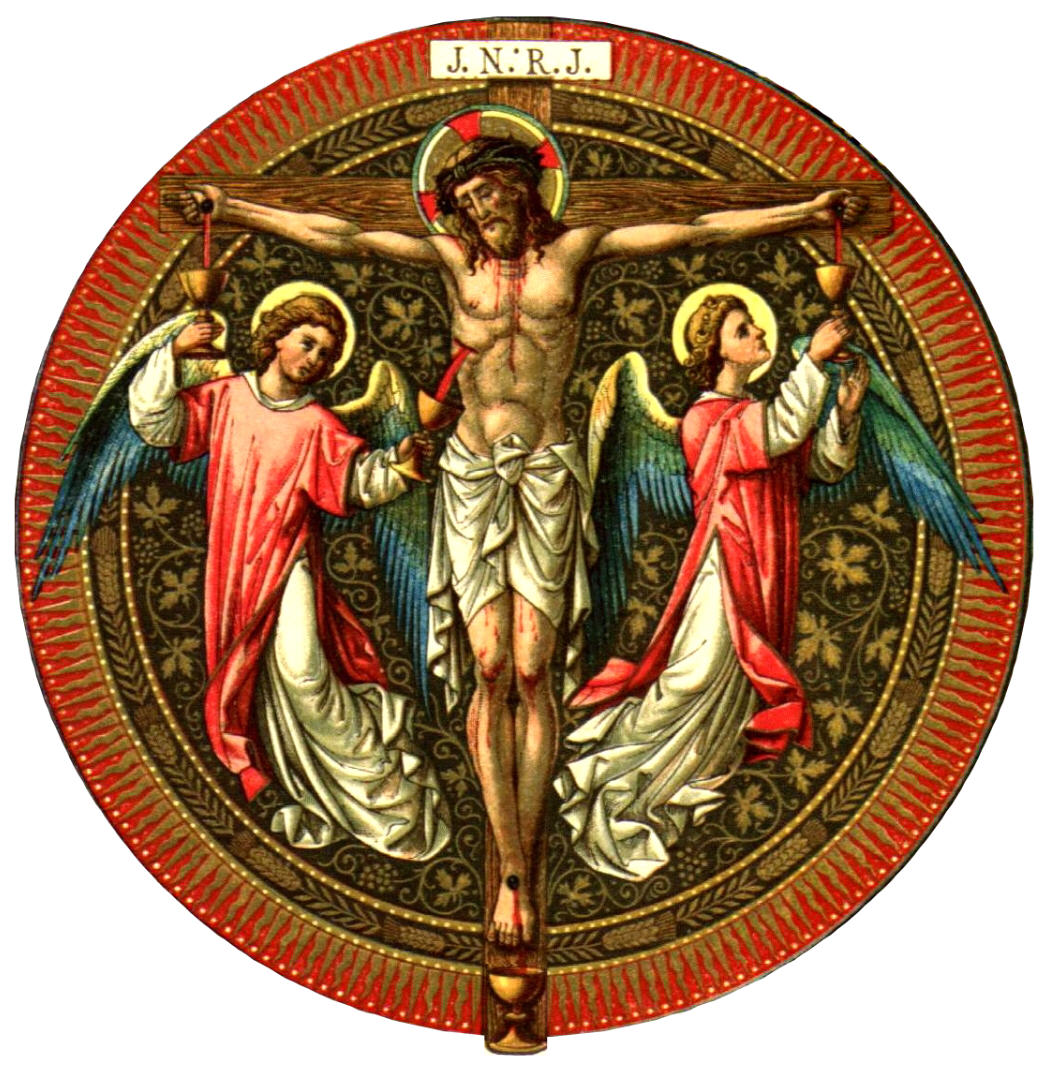
July: the month of the Precious Blood

July is the month when Catholics traditionally have a devotion to the Precious Blood. The spilling of this blood is the root of our salvation and each week in July one of our hymns will mention the Precious Blood. Watch out for them.


Walsingham association


Thank you to all who supported the inaugural meeting of the Reading Branch of the Walsingham Association yesterday.

A link to the Walsingham association site can be found here, as well as in the right-hand sidebar. One of the things we learned yesterday was the role of the new media in encouraging pilgrimage and increasing the national profile of the shrine. In particular, you can find broadcasts of Masses on their youtube channel here, or follow their latest developments on social media via their twitter feed or facebook page.


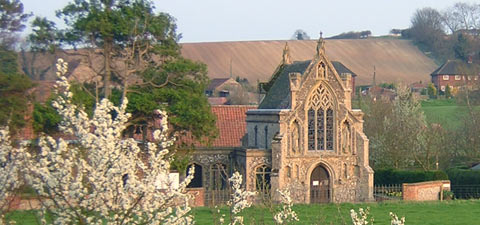
The Roman Catholic Shrine in Houghton St Giles, Walsingham

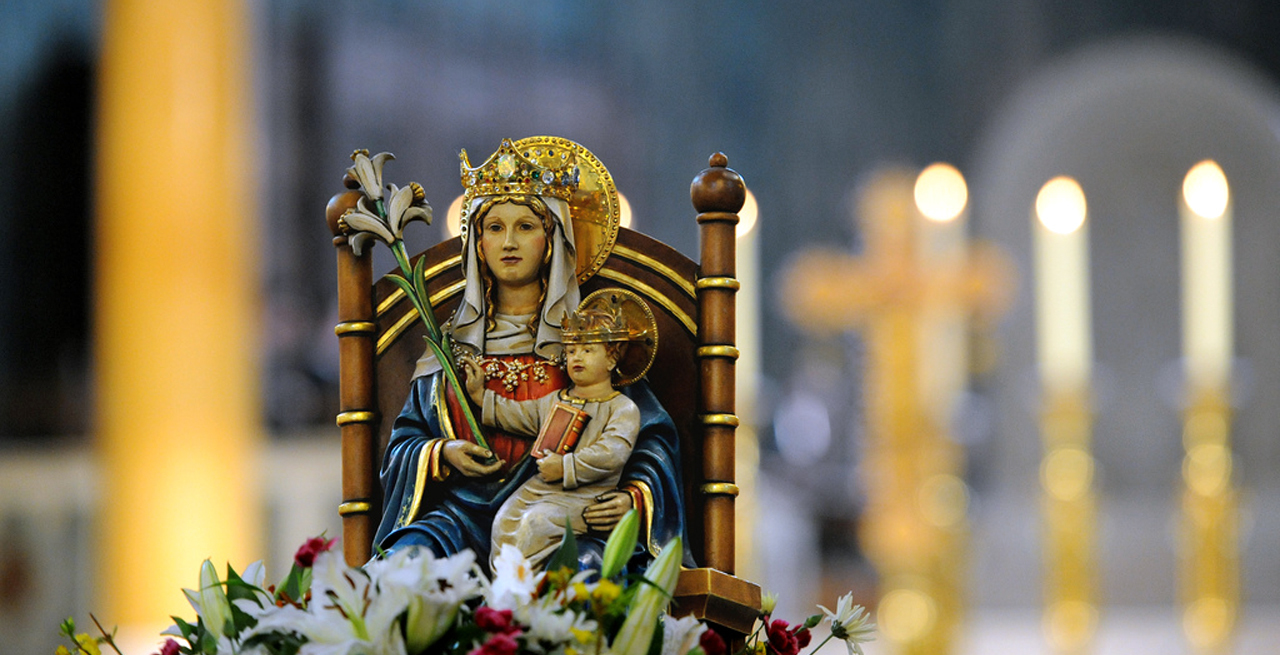
We conclude with this elegant hymn to Our Lady of Walsingham.